


05

Maintenance and monitoring
Our divers are constantly on-site to monitor the reef and take care of maintenance wherever necessary.


What are we doing?
Together with our partner, Livingseas Foundation, we are restoring coral ecosystems in Bali, Indonesia. We’re focused on the following activities:
We chose this particular area right on top of the Wallace Line, because of its cool, nutrient-rich waters which haven’t seen any bleaching events to date.
Why this project?

Coral reefs act as natural carbon sinks and coastal protectors, absorbing CO₂ and buffering waves that would otherwise erode shorelines. Yet with ocean warming and acidification, many reefs have already crossed a tipping point beyond natural recovery. By restoring coral ecosystems in Bali, we help rebuild this vital blue carbon ecosystem and strengthen local climate resilience.

Healthy reefs are among the most biodiverse ecosystems on Earth, hosting over 25 % of all marine species. Our local partner’s restoration sites have seen fish and coral populations multiply within months, turning degraded “marine deserts” into thriving habitats. Our project accelerates this recovery, creating safe breeding grounds and restoring balance to coastal ecosystems.

Reef restoration directly benefits coastal livelihoods in Bali through sustainable tourism, fishing, and training for local youth. Community members are involved in every step of the process, from coral planting to reef monitoring, creating new jobs and ocean stewardship. A healthy reef means a stronger local economy and a safer coastline for future generations.
Project approach

All reef stars, superstars and nursery constructions are made by the local communities.

The coral fragments used for our nurseries come from a coral reef which is about to be destroyed.

Fixing the structures in the ocean is no easy feat, so our expert divers take care of this.

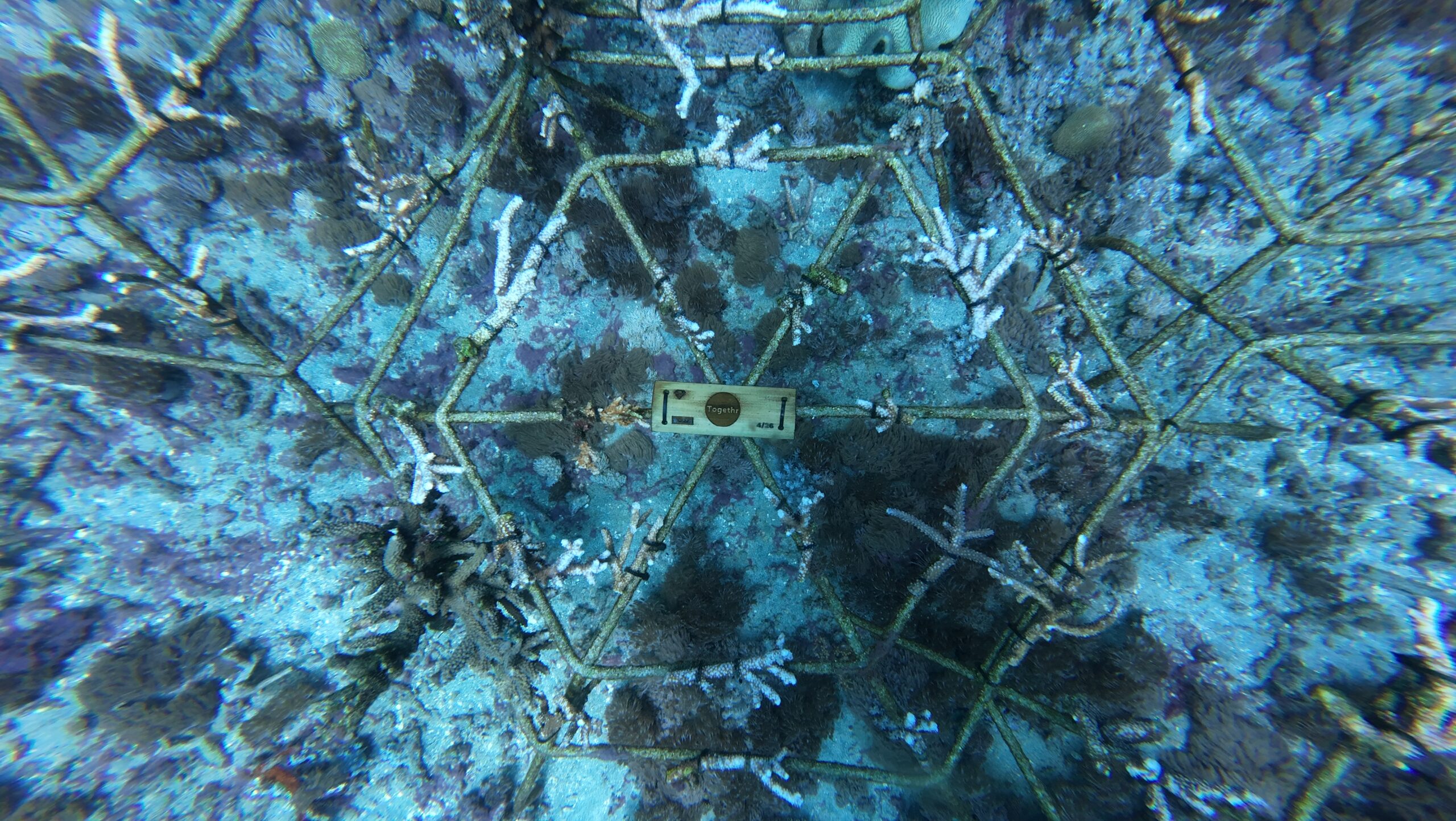
Corals can be attached on land by donors, but are also attached underwater by divers.
Our divers are constantly on-site to monitor the reef and take care of maintenance wherever necessary.
Plant your own reef
Help us restore coral ecosystems in Bali, Indonesia. Every single coral fragment you help us plant restores biodiversity, protects coastal communities, and supports local livelihoods.
For every donation you can put a name tag on the coral structure and you will receive regular picture updates of your sponsored coral ecosystem.
Life on the reef


Your contact person
Have questions about this project? Feel free to reach out to our Ocean Conservation and Restoration Lead, Lien.


