


05

Maintenance and monitoring
Our divers are constantly on-site to monitor the reef and take care of maintenance wherever necessary.


What are we doing?
Together with our partner, Livingseas Foundation, we are restoring coral ecosystems in Bali, Indonesia. We’re focused on the following activities:
We chose this particular area right on top of the Wallace Line, because of its cool, nutrient-rich waters which haven’t seen any bleaching events to date.
Why this project?

Coral reefs don’t remove meaningful amounts of CO₂ from the atmosphere, but they play a key role in climate adaptation. Healthy reefs reduce wave energy reaching the shore by an average of 97%¹, acting as a natural barrier against storms and erosion as sea levels rise. At the same time, warming seas cause bleaching, and many reefs can no longer recover on their own.
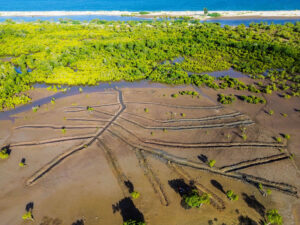
In Padangbai, we help rebuild reef structure where it has been lost, and we monitor the site for signs of bleaching and disease.
So far: no bleaching or disease recorded in the monitored area.
¹ Ferrario et al. (2014), Nature Communications.

Healthy reefs are among the most biodiverse ecosystems on Earth, hosting over 25 % of all marine species.
Once a reef has collapsed into rubble, new corals struggle to settle and the fish and invertebrates that depend on them disappear.
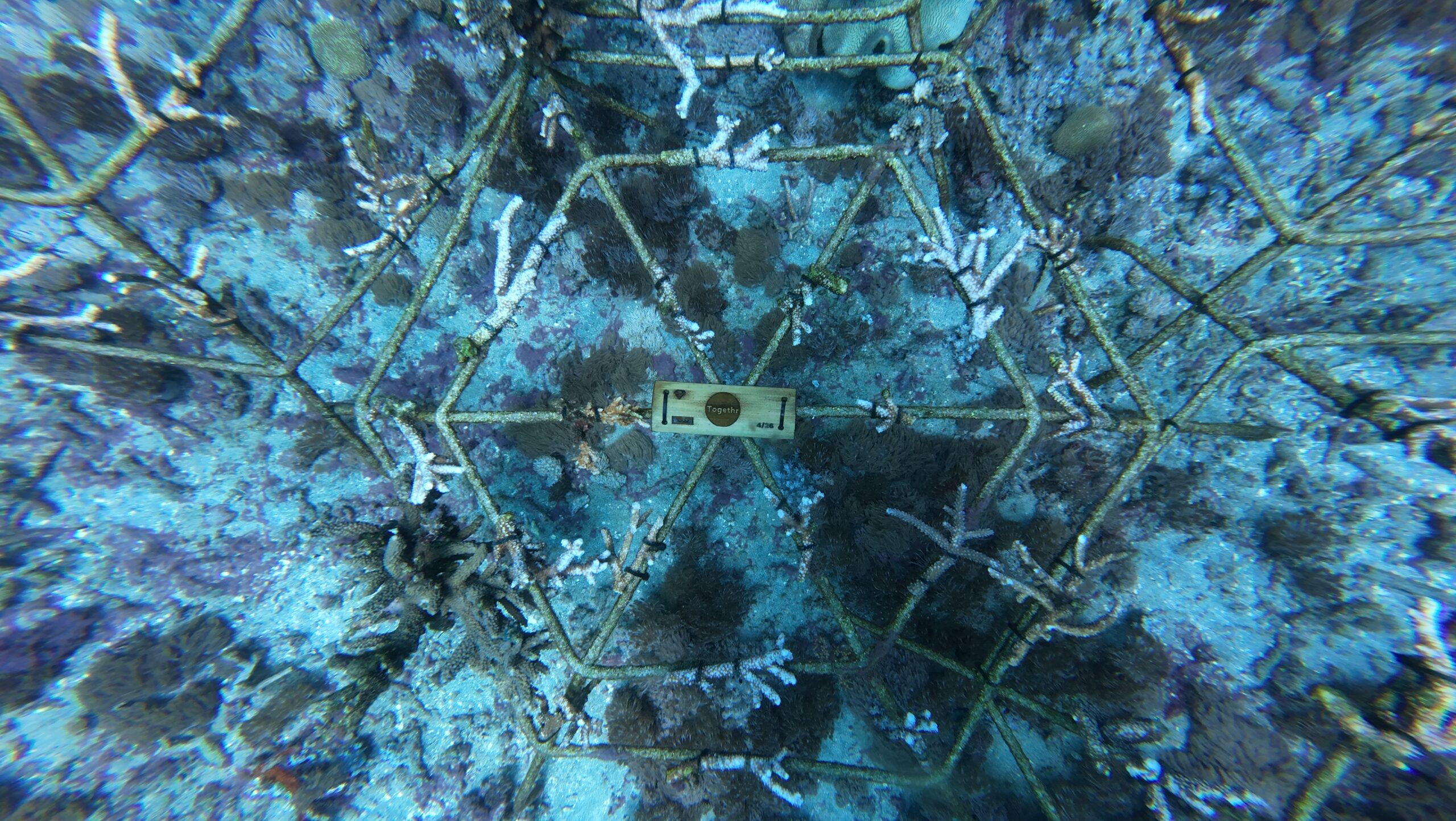
Our structures give corals a stable base to grow on. As they grow, they create shelter and food for reef life. With our partner Livingseas Foundation, divers monitor coral survival, natural coral settlement and fish life.
So far: 83–94% coral survival after 3 months on monitored structures, 8 coral genera settling naturally, and 102 fish species recorded in the restoration area.
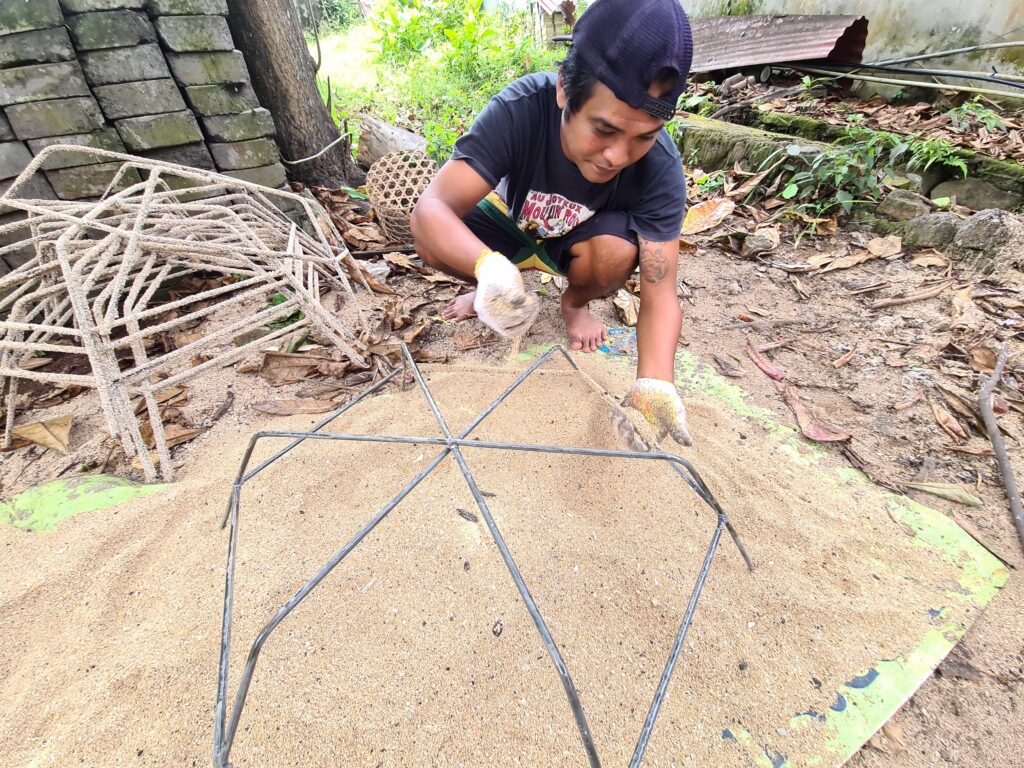
Reef restoration directly benefits coastal livelihoods in Bali through sustainable tourism, fishing, and training for local youth. Community members are involved in every step of the process, from coral planting to reef monitoring, creating new jobs and ocean stewardship. A healthy reef means a stronger local economy and a safer coastline for future generations.
Project approach

All reef stars, superstars and nursery constructions are made by the local communities.

The coral fragments used for our nurseries come from a coral reef which is about to be destroyed.

Fixing the structures in the ocean is no easy feat, so our expert divers take care of this.

Corals can be attached on land by donors, but are also attached underwater by divers.
Our divers are constantly on-site to monitor the reef and take care of maintenance wherever necessary.
Plant coral with us
Help us restore coral ecosystems in Bali, Indonesia. Every single coral fragment you help us plant restores biodiversity, protects coastal communities, and supports local livelihoods.
For every donation you can put a name tag on the coral structure and you will receive regular picture updates of your sponsored coral structure(s).
Life on the reef


Your contact person
Have questions about this project? Feel free to reach out to our Ocean Conservation and Restoration Lead, Lien.


