



From 8 to 137 Trees: A Race to Save the Magnolia buenaventurensis
In 2021, a remarkable discovery was made in Ecuador’s southwestern cloud forests: a new Magnolia species, later named Magnolia buenaventurensis. But the excitement was tempered by urgency—only eight individual trees were known to exist.
Today, just a few years later, there is reason for cautious hope.
Through our project “Saving the Critically Endangered Magnolia buenaventurensis,” the known population has grown to 137 individuals—83 adult trees and 54 seedlings, representing the first successful propagation of this species.
This is the story of how science, persistence, and local stewardship came together to give one of the world’s rarest trees a fighting chance.

A Species on the Brink
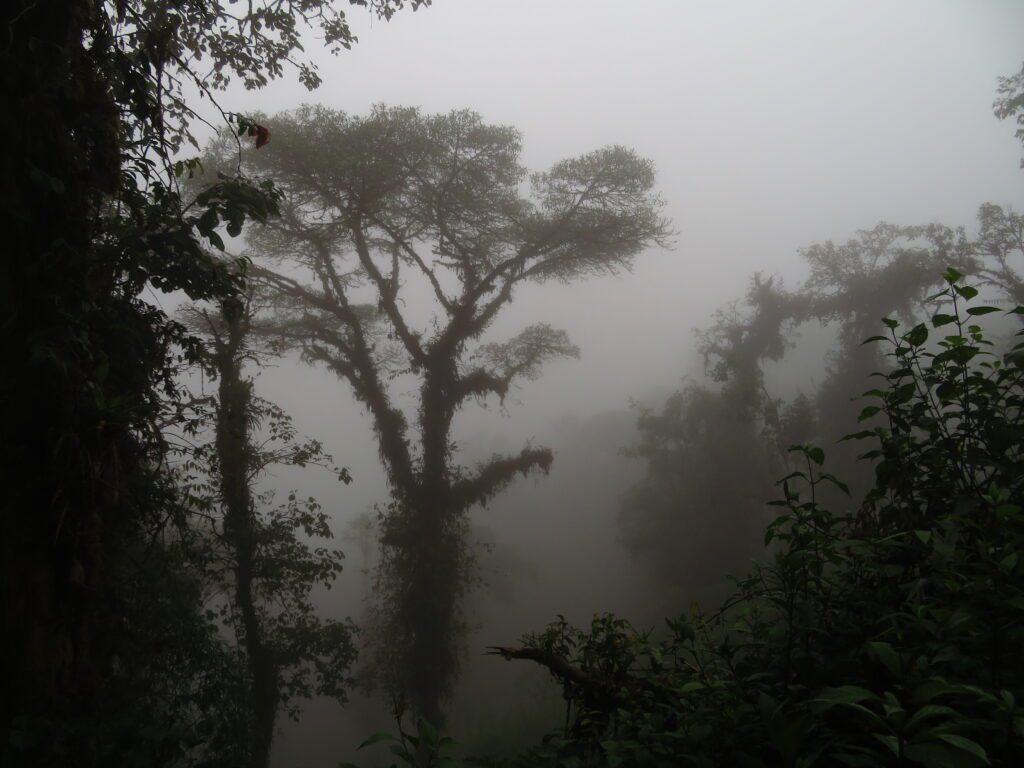
From the outset, it was clear that Magnolia buenaventurensis faces extraordinary risks. All known individuals are confined to a single, highly restricted sector of the Buenaventura Reserve, between 1,200 and 1,500 meters above sea level.
Over three years of systematic surveys, park rangers and reforestation staff searched seemingly suitable habitat across the reserve using 15 linear monitoring plots—often in steep, rugged terrain. No additional populations were found outside the original area, confirming the species’ extremely limited distribution and high extinction risk.
In conservation terms, this means there is no backup population. If this one site fails, the species could disappear.

Finding Trees, One Patrol at a Time
The increase from 8 to 83 adult trees did not happen overnight—or by chance.
It was the result of constant patrols, detailed field observations, and deep local knowledge, led by the park rangers and restoration team of Fundación Jocotoco at the Buenaventura Reserve. By repeatedly revisiting the forest and carefully scanning the canopy, the team was able to locate previously unrecorded individuals hidden within dense vegetation
Each newly found tree was mapped, monitored, and incorporated into a growing conservation strategy.

The Reproduction Bottleneck
While finding adult trees was encouraging, reproduction quickly emerged as the project’s greatest challenge.
Despite targeted searches during multiple flowering seasons, only one fruit was recovered in 2025. Several factors contribute to this bottleneck:
-
Very limited flowering
-
Premature flower drop
-
Intense seed predation by birds, attracted to the bright red seeds
-
Fruits developing high in the canopy, often requiring climbing with safety harnesses to access
From that single fruit, the nursery team successfully germinated 15 seedlings—a small number, but a critical breakthrough for a species that had never before been propagated.

Turning Knowledge into Action
Conservation cannot wait for perfect conditions.
Since 2024, 54 Magnolia buenaventurensis seedlings have been planted within the reserve under active management. These plantings are carefully maintained through regular cleaning and monitoring to improve survival and growth rates
Together, population monitoring, nursery propagation, and in situ planting now form the first concrete safeguard for this Critically Endangered species in the wild.

Why This Project Matters
This project demonstrates what is possible when modest funding is paired with:
-
Strong local teams
-
Science-based decision-making
-
Long-term commitment
With relatively limited resources, it has been possible to:
-
Confirm the full known distribution of a species
-
Increase the known population more than 17-fold
-
Achieve the first successful propagation
-
Establish a growing planted population in the wild
In a global biodiversity crisis, these kinds of focused, high-impact efforts matter.

Looking Ahead
The work is far from over.
Recent patrols have recorded 10 trees in bloom, offering renewed hope for future seed collection. In the coming phase, the team will:
-
Monitor flowering trees to secure additional fruits
-
Develop a species-specific germination protocol
-
Continue patrols in the upper reserve to search for additional individuals
-
Expand planting efforts to further reinforce the population

With Gratitude—and a Call to Action
This project was implemented by Fundación Jocotoco and the dedicated park rangers of the Buenaventura Reserve, with the generous support of Fondation Hëllef fir d’Natur.
Their support is helping turn discovery into survival.
We are now raising €5,000 to fund the next phase of this work and further secure the future of Magnolia buenaventurensis.
If you would like to learn more or support this effort, we would love to hear from you. Donate here: https://habitatsconservation.org/donate or contact us at raf@habitatsfoundation.org

Other stories

Our founders' story: Raf
We ask our founders four questions to get to know them better and to fully understand why exactly they decided to found Habitats. In this blog: Raf.